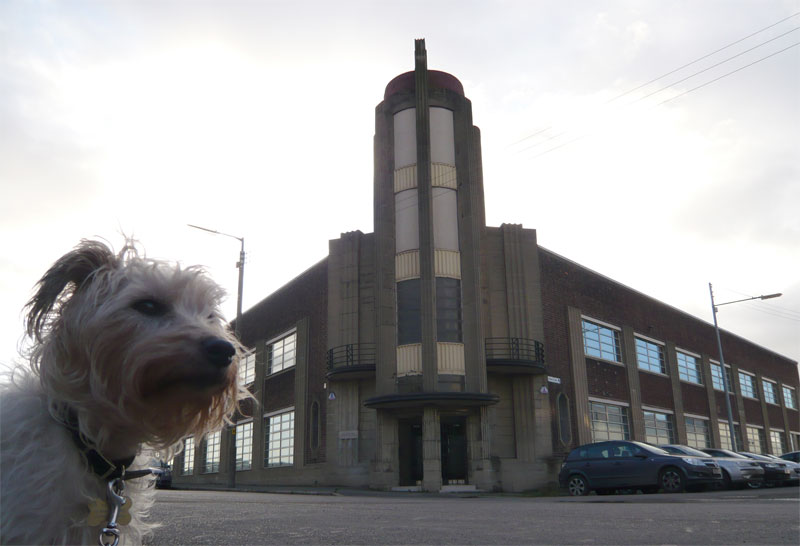
Control Tower, Dumfries Airfield

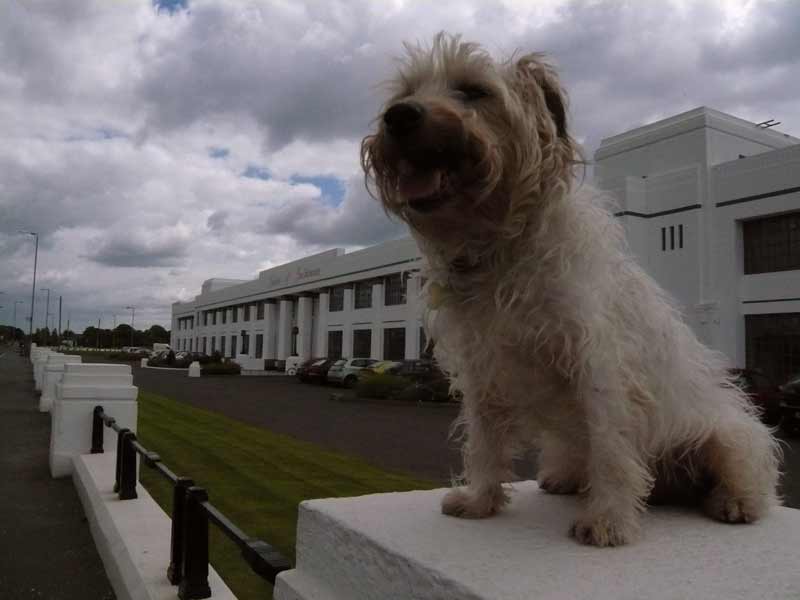
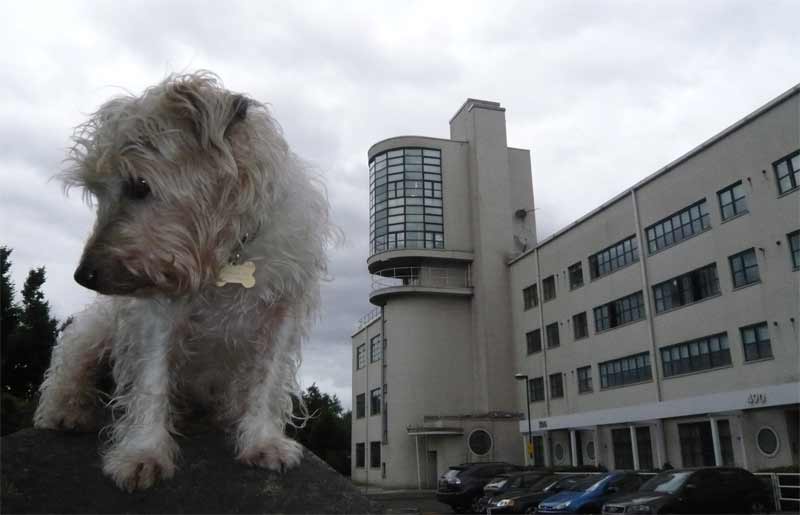
Control Tower, Dumfries Airfield, Heathall, Dumfries & Galloway – 1940

Control Tower, RAF Dumfries

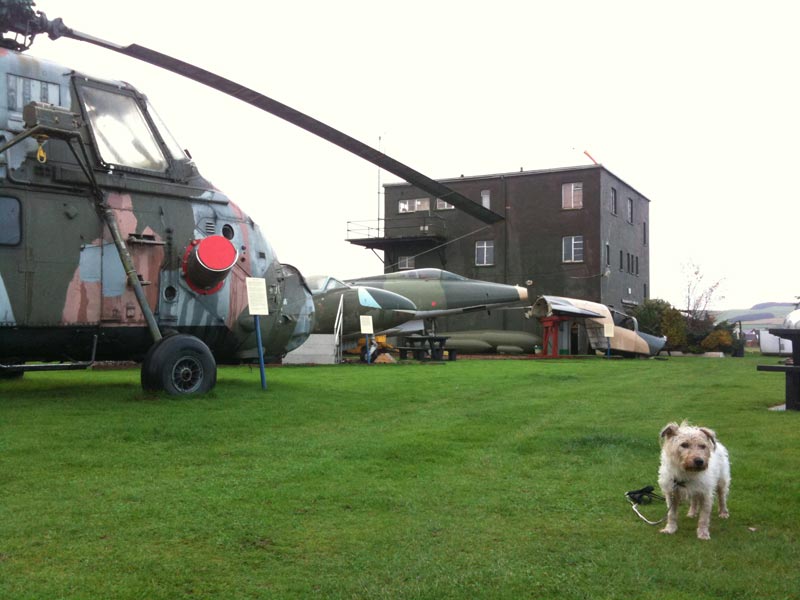
Pickles at dumfries airfield

This is the restored Control Tower of the former WWII airfield at Dumfries, and the centrepiece of the Dumfries & Galloway Aviation Museum. I had wanted to include a photo of me beside a Spitfire – the perfect example of the development of Art Deco streamlined design, of course – but we were here at the end of October and my god it was cold and wet, so I began to lose my patience (there were also a few rabbits kicking around which rather distracted me!).

Tell you what though, this museum is a great place, if you’re into planes that is. Don’t expect the curatorial standards of the Metropolitan Museum, it is evidently run by enthusiastic volunteers, but the Dumfries & Galloway Aviation Museum makes a really fun and informative visit – and they let dogs in!

http://www.dumfriesaviationmuseum.com/

St.Peter’s Seminary, Cardross

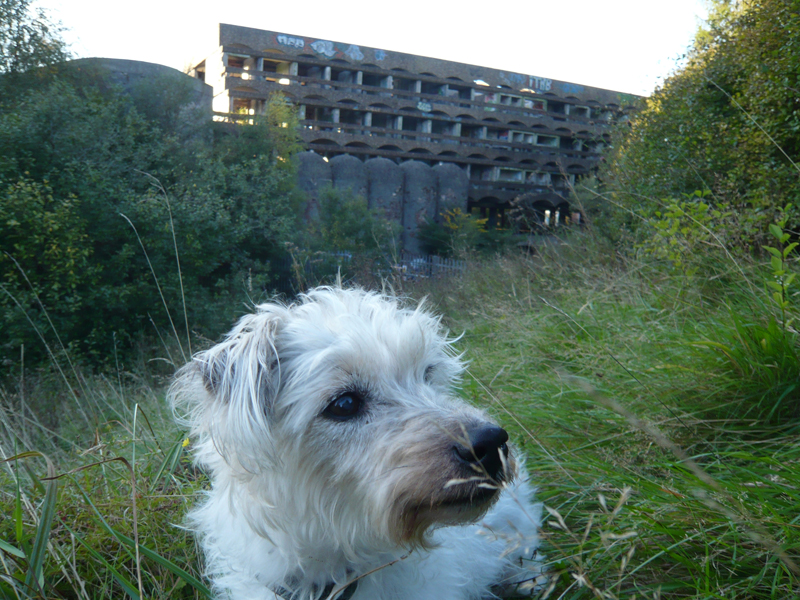
St Peter’s Seminary - Cardross, Dumbartonshire - Gillespie Kidd & Coia, 1962-68

St.Peters Seminary

St.Peters Seminary

St.Peters Seminary inside

St.Peters Seminary central staircase

I know, I know, I can hear you all crying I should be wearing my high-viz vest in such a dangerous building… Lots has been written about this amazing but depressingly derelict building. For starters you can read lots more, see photos, find maps and hear people’s memories of this seminary at these sites:

http://riskybuildings.c20society.org.uk/docs/26stpeters/index.html

http://www.glasgowarchitecture.co.uk/cardross_seminary.htm

http://www.hiddenglasgow.com/StPeters/index.htm

http://www.secretscotland.org.uk/index.php/Secrets/StPetersSeminary

K8 telephone kiosks, Erskine Bridge, Renfrewshire

K8 telephone kiosks, nr Kilmartin Village – Bruce Martin, 1968

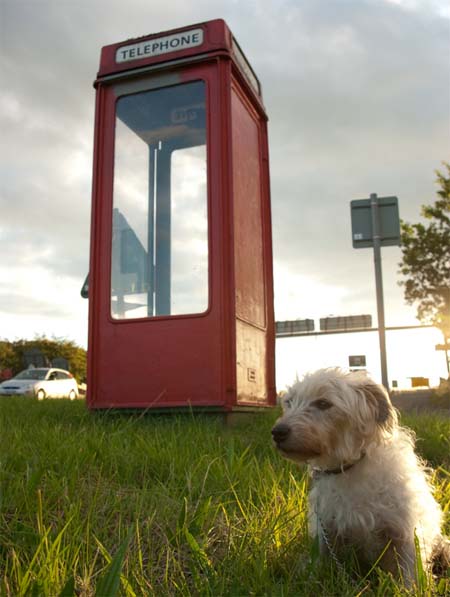
Pickles the dog at rare K8 kiosk

north side, traffic heading North

Pickles at rare K8

north side, traffic heading South

As promised a few months ago, I have found these wonderful examples of the very rare K8 telephone kiosk on the north side of the approach road to the Erskine Bridge in Renfrewshire; I’m fairly sure there are another two on the south side of the bridge as well. Designed by Bruce Martin in 1968, they were a rationalisation of the earlier K6 kiosk designed by Dog and Deco fave, Sir Giles Gilbert Scott.

Martin’s K8 was the last red cast iron telephone box ever to be constructed in the UK, and represents the final stage in the lineage of a design that has become a global icon and symbol of Britain. Pitifully few of the 11,000 boxes manufactured remain and it is an incredibly rare feature in the British landscape – the boxes were too young to be protected by English Heritage when BT began decommissioning boxes in 1984.

However, twelve known survivors have been submitted to English Heritage by the Twentieth Century Society, who are also running a campaign to find out about any other boxes they may not be aware of yet. You could also tell us here if you know of any other K8 kiosks.

People Will Always Need Plates K8 tea towels

Why not buy a pack splendidly good K8 tea towels like these ones, designed by the fabulous People Will Always Need Plates. All money goes to the Twentieth Century Society campaign to protect the phone boxes.

Weirs of Cathcart, Glasgow

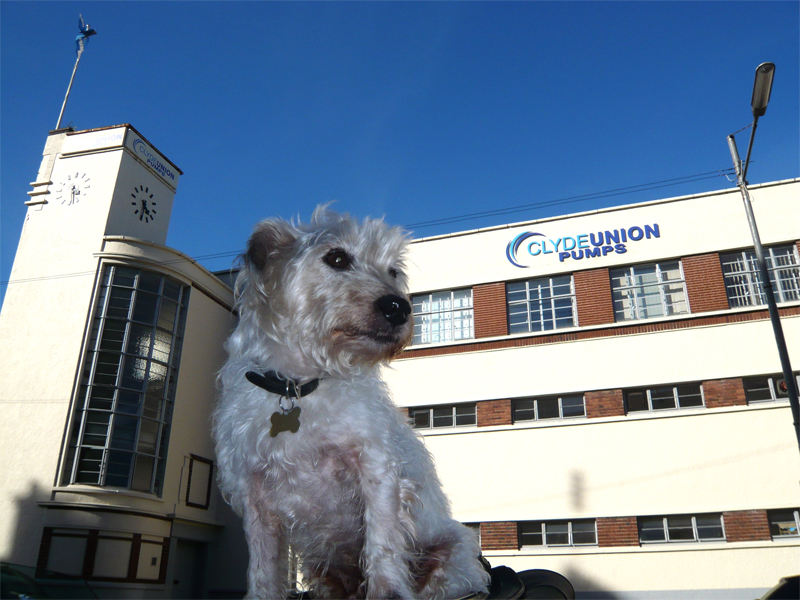
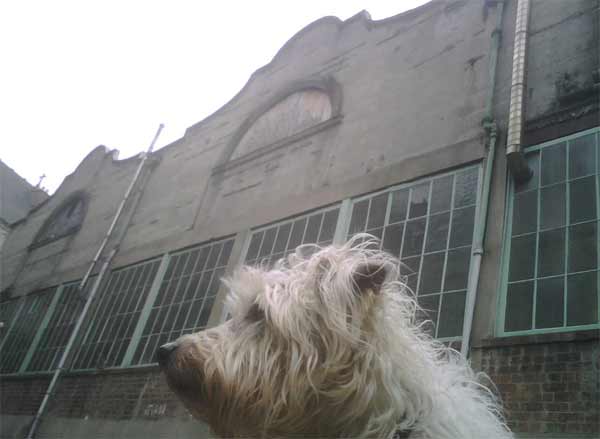
Weir Pumps Ltd, Cathcart works, 147-149 Newlands Road – (Offices and amenity block) Wylie, Shanks & Wylie – 1937

weirs of cathcart factory

Weirs of Cathcart

Weirs of Cathcart

Weirs of Cathcart

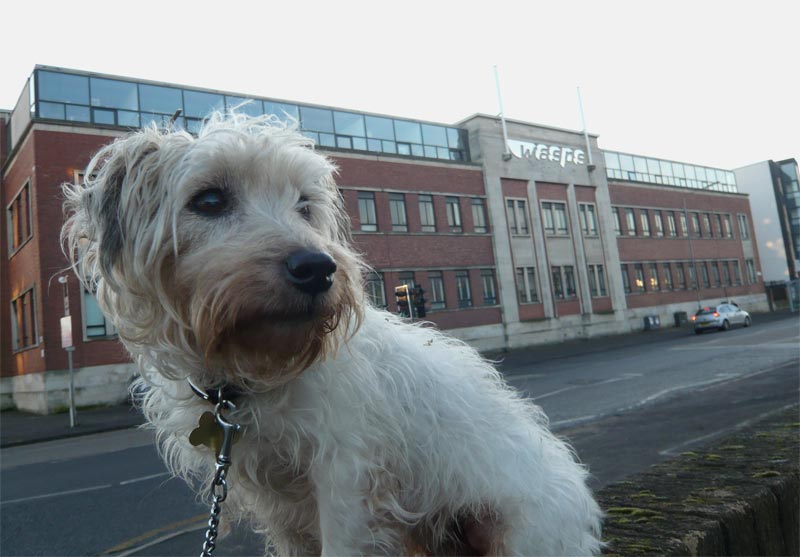
Weirs was founded in 1870 and moved to this site in 1886 where they manufactured pumps, boilers and other auxiliary equipment for ships. The factory began to manufacture aeroplanes in 1917 and Weir’s became the largest Clydeside producers of military aircraft. Around that time William Douglas Weir, son of the founder James Weir and former Director of the company, became Secretary of State for the RAF.

No longer the Weir Group’s headquarters, the Cathcart plant is estimated to have had up to one million square feet of factory space at one stage. It is still used for their pump manufacturing division, but is threatened by regular proposals to turn the site into residential housing – originally a greenfield site, the residential tenements around it grew up subsequently.

It is still a massive complex, and you can read more about it in the book Greater Glasgow: An Illustrated Architectural Guide by Sam Small.

You can also get some more information about the production of the Weir autogiro aircraft on the Hidden Glasgow forum and see some good pictures of the site, including aerial photos here.

K6 telephone box & the Fortingall Yew

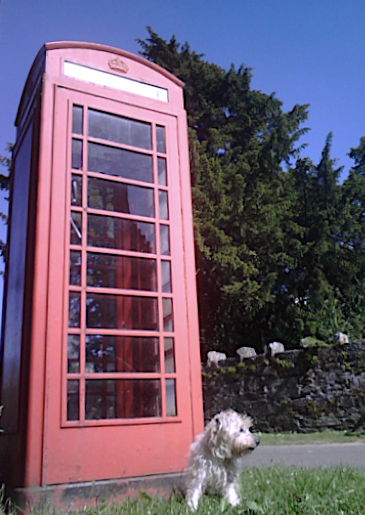
K6 telephone box, UK – Sir Giles Gilbert Scott – 1935

K6 telephone box and the Fortingall Yew tree

I had a lovely trip last weekend to Glen Lyon in Perthshire, so I thought I’d strike a pose in front of this classic phone box with the oldest tree in Europe (and possibly the world), the Fortingall Yew, in the background. The tree is believed to be about 5,000 years old and Pontius Pilate was meant to have grown up in the village – you can find out more about the Fortingall Yew here. But enough about nature, back to my deco!

I know this isn’t exactly a factory, but the K6 telephone box was designed by Sir Giles Gilbert Scott, who also designed Bankside Power Station and Battersea Power Station. The K6 was the most popular box he designed for the General Post Office, it followed his K2 from the 1920s – you can find out more about red phone boxes here. The Twentieth Century Society have recently launched a campaign to save the K8 designed by Bruce Martin in 1968. There are believed to be only 12 examples of the K8 left in Britain – it is my mission to try and strike a pose by one of them soon…

Bookmark and Share